
OPEN EDITORIAL
By Zulema Borjas, PhD in Hydrology and Water Resources, Innovation Project Manager at Sorigué.
Reports on green hydrogen keep coming, and almost all of them point in the same direction. In its Global Hydrogen Review 2026, the International Energy Agency confirms that low-emissions hydrogen has, for the first time, passed 1% of global production. It is a symbolic milestone, and also a reminder of how far the sector still is from a real transformation. The European Commission’s Joint Research Centre (JRC) warns that Europe’s electrolyser factories are running at barely 10% of their capacity, while PwC, in its study for Hydrogen Europe, identifies the lack of guaranteed offtake as the main barrier to investment.
Spain, with more than 300 projects in its national census and one of the most ambitious hydrogen strategies in Europe, captures this moment well. According to the latest census by the Spanish Hydrogen Association (AeH2), developers expect to reach around 7 GW of electrolysis by 2030, well short of the official 12 GW target, and only 400 MW have reached a final investment decision so far this year. One of them is Onuba, in Huelva, a 300 MW plant that can only expand to 405 MW if grid capacity becomes available.
Low-emissions hydrogen has, for the first time, passed 1% of global production. It is a symbolic milestone, and also a reminder of how far the sector still is from a real transformation.
Cost, demand, regulation and grid. The same diagnosis appears in report after report. Water is starting to surface in a few dedicated studies, yet it is still missing from the reasons the sector itself gives for stalled investment. It belongs there.
A brake that has already sounded its first warning
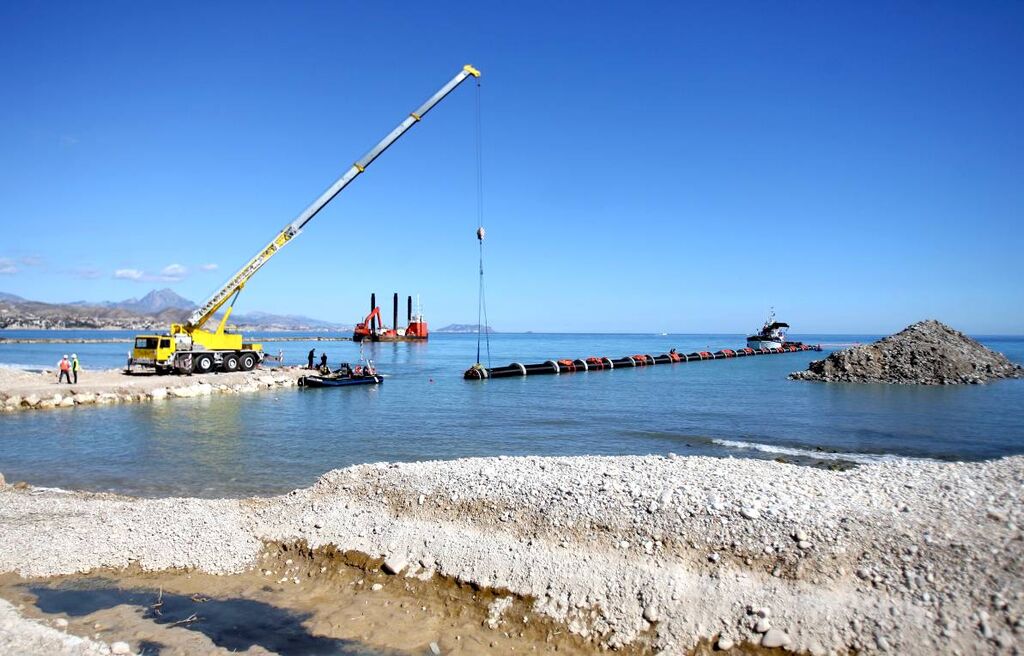
Virtually every green hydrogen project underway relies on water electrolysis, a process that requires high-purity demineralised water. Stoichiometry sets a minimum of about 9 litres per kilogram of hydrogen, but actual consumption is higher. Once all abstracted water is counted, including purification rejects and cooling, the figure can double or triple. And when the source is the sea, upstream desalination has to be added too.
The Fundación Renovables put numbers on what this means for Spain. Meeting the 12 GW target would require around 13 million cubic metres of water a year, equivalent to a full day of the entire country’s urban water supply. It is also a consumptive use, since that water does not return to the environment.
At European scale, the volume is modest. The JRC report on water and hydrogen published in October estimates actual consumption at 18 to 22 litres per kilogram and concludes that electrolysis will not strain most water supplies. However, the same report warns that the risk is concentrated in Southern Europe, led by Spain, Italy and Portugal, and calls for hydrogen planning that takes water into account. The Clean Hydrogen Partnership sums it up well, noting that Europe will have enough water, though not necessarily where hydrogen is cheapest to produce.
Nor is this a purely Mediterranean problem. In the Netherlands, reaching the 8 GW target would require some 11 million cubic metres of pure water a year, around 1% of national drinking water capacity, and the Dutch drinking water sector has opposed using it for hydrogen production. The real question, then, is not how much water hydrogen consumes, but where it needs it, which is often in already stressed basins and in the same industrial hubs where projects cluster.
Huelva is the first warning. The province hosting what is presented as Europe’s largest green hydrogen plant faces a structural water deficit that local irrigators put at 80 million cubic metres, which currently prevents any new water permits from being granted. Their representatives acknowledge that industries seeking water for hydrogen will find no resources available and have proposed partnering with them to build a desalination plant.
The question is no longer whether water can hold hydrogen back, but how many more regions will find out as the sector grows.
Extending water security to the energy debate
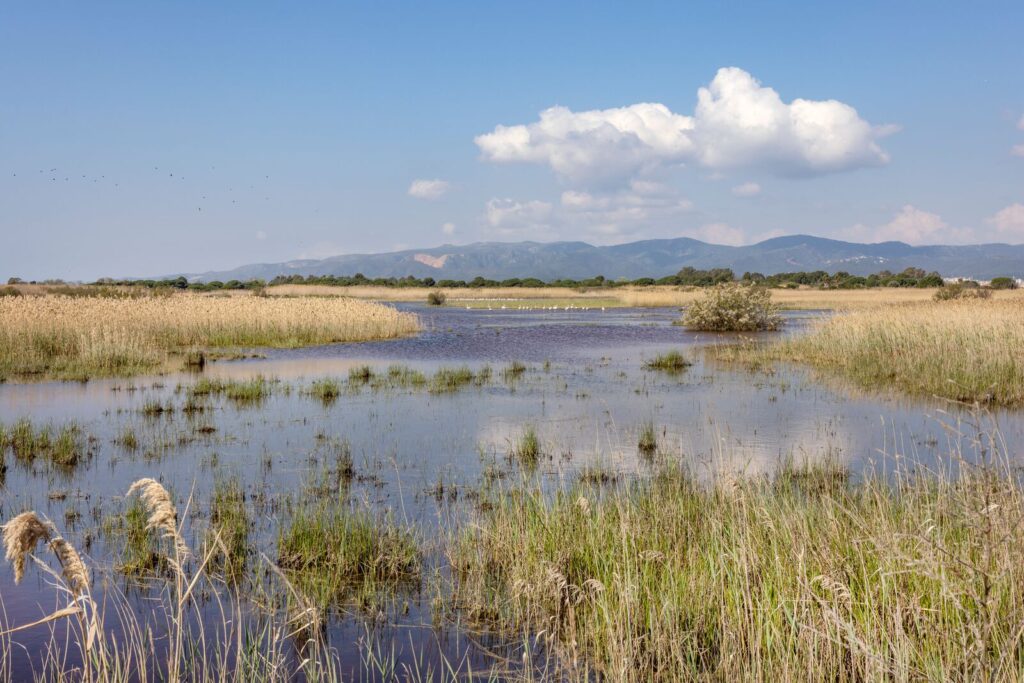
Water security, understood as guaranteeing enough water of sufficient quality for people and economic activity, has for years been broadening to include aquatic ecosystems, because without healthy rivers, aquifers and wetlands there is no sustainable long-term supply. It is time to take the next step and apply the same logic to the link between water and energy. There can be no real energy security if it quietly competes with a region’s water security.
Without healthy rivers, aquifers and wetlands there is no sustainable long-term water supply.
Designing the energy transition without this criterion would repeat the mistake we already made with agriculture, when a system was optimised without regard for the resource it depended on. Irrigated agriculture took decades to treat water efficiency as a design criterion rather than an afterthought. The energy sector still has time to avoid that lag by building water into the very first sketch of every plant, rather than treating it as one more chapter in the environmental impact assessment.
The ASTERISK case: designing before the problem emerges
If desalination is the answer Huelva is looking for, projects like ASTERISK are exploring a complementary path. Funded by the Clean Hydrogen Partnership, the project is developing anion exchange membrane (AEM) electrolysers that can run directly on seawater, designed for places where a new desalination plant is not viable or where its brine is an environmental concern. To do so, it is analysing seawater samples from three Mediterranean locations. Pre-treatment is limited to removing suspended solids, organic matter and biological load, aiming to cut energy consumption by more than 35% compared with conventional reverse osmosis, while allowing the sea’s own ions to take part in the process.
That said, the main advantage is not about energy. By working with seawater, hydrogen production no longer competes for freshwater abstraction permits or generates a rejected stream to manage. Instead of discharging brine, the process valorises the concentrate, recovering magnesium, calcium, strontium or lithium through membrane crystallisation and using waste heat from the electrolyser itself. Some of these elements, such as lithium and magnesium, are on the EU list of critical raw materials. Seawater thus stops being an obstacle to be “cleaned” and becomes a resource.
More than an efficiency gain, this is a different way of framing the question. It is not only about how to produce more hydrogen, but about how to produce it without displacing water from its place in society.
Water as an investment, not an added cost
Choosing processes that do not compete for freshwater is not an extra cost. It is an investment in territorial resilience, in the stability of coastal communities and in the long-term viability of the energy transition itself. Water management has taught us that protecting a shared resource also means protecting the jobs and wellbeing that depend on it. On coastlines where tourism, fisheries, agriculture and now energy all compete for the same resource, every new industrial project should be clear about what it takes from the territory and what it gives back.
A question for 2030
A few years from now, when we look back at what held back (or drove) the take-off of green hydrogen, will water be on that list? Or will we arrive late, as happened with the electricity grid, and discover the problem only once it has become urgent? In Huelva, the grid has already constrained the size of a plant, and the water deficit has already closed the door to new permits.
Projects like ASTERISK are choosing not to wait for the question to become a crisis.
Related content: