
Happy 8th of October!
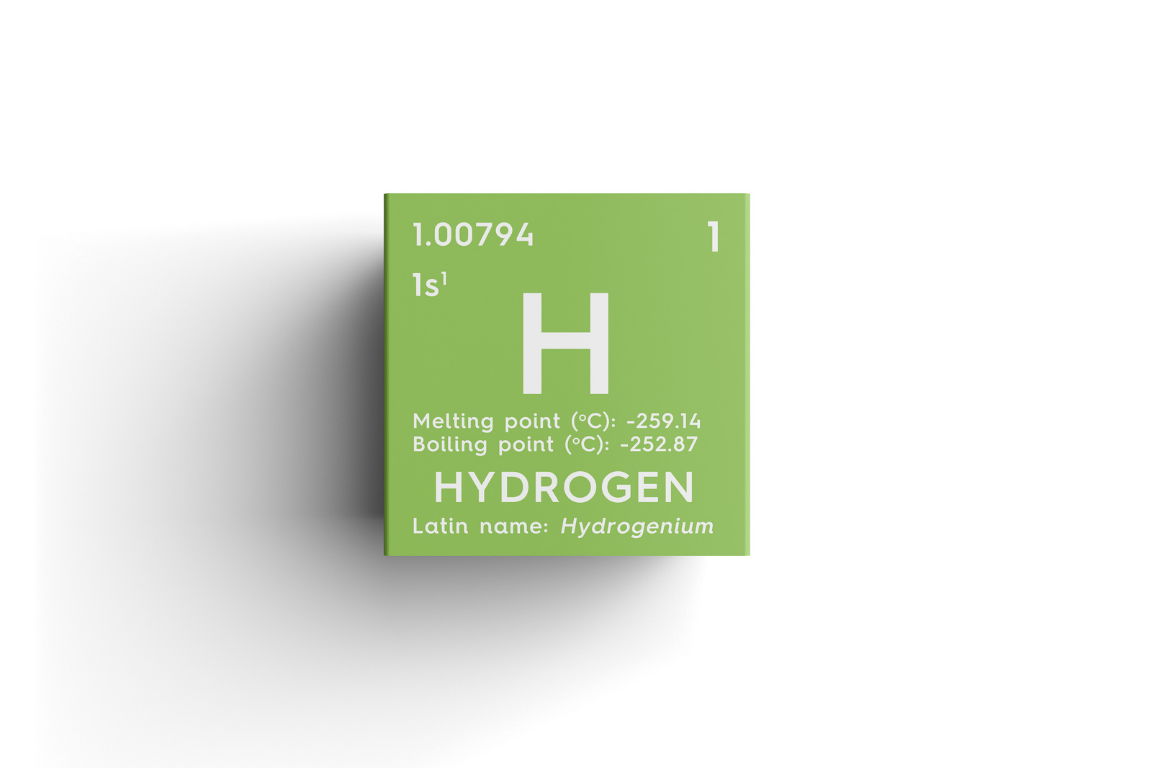
Today, we are celebrating World Hydrogen Day, and the date is no coincidence: the atomic mass of hydrogen is 1.008 atomic mass units (u) – hence 10/08, like the Americans would write up today’s date.
In 2015, the Fuel Cell and Hydrogen Energy Association (FCHEA) launched this initiative to highlight the importance of hydrogen as a key factor in decarbonising our economy.
At ASTERISK, we have created this special animation to pay tribute to the element at the heart of all our work, and to honour those who played a part in its discovery.
Our illustration tells a story made up of little tales and interesting facts about our protagonist, so let’s take a look at them one by one.
1. A starry sky filled with hydrogen
Did you know that hydrogen accounts for about 75% of the visible mass of the universe? It’s the most abundant element in the cosmos, as well as the simplest element on the periodic table.
When we look up at a night sky, we marvel at the beauty of the infinite lights twinkling above our heads, but we aren’t always aware that reality is far broader than what our eyes can see: almost everything we observe is made up of hydrogen, from interstellar space to stars like ours.

This element is also the fuel that keeps the centre of our solar system alive. It is the nuclear reactions that take place inside the star which produce the light and heat that make life on our planet possible.
Make no mistake about hydrogen: it may be small, but its power is huge. The fusion of hydrogen atoms is a process that releases staggering amounts of energy, and it plays a key role in the formation of planets, stars and galaxies.
So, every time you enjoy a starry sky, thank hydrogen. Our Milky Way neighborhood would surely look a lot more boring without this element!
2. Around the world high in the sky
Human beings have always loved pushing all the boundaries that nature sets for us. That is why, on December 1, 1783, French inventor Jacques Charles, along with mechanical engineer Nicolas-Louis Robert, gave the citizens of Paris an unprecedented spectacle: from the Tuileries Garden, they piloted the first manned flight in a gas balloon filled with hydrogen, which is about 15 times lighter than air. Before this pair of explorers amazed the world with their invention, other similar devices had been designed, such as hot-air balloons, which allowed people to cover distances of several kilometers through the skies.
However, the hydrogen gas balloon, also known as a Charlière after its inventor, offered certain advantages compared to hot-air balloons: it could fly higher and travel faster. That said, they were very dangerous due to hydrogen’s high flammability, which is why hydrogen was eventually replaced by much safer helium.
The first balloon designed by Charles and Robert was launched on an pilotless flight on August 27 of that same year, just a few months earlier. Expectation was so high that daily updates on the balloon’s filling progress were published in Paris, and it had to be clandestinely moved to the launch site. After a 45-minute flight, it landed in a village near the French capital, where terrified peasants destroyed the invention.

The operating principle behind it is simple: the balloon is filled with a gas much lighter than air, creating an upward lifting force. Unlike hot-air balloons, this system does not require continuous fuel combustion, giving 18th-century adventurers a very compelling range.
3. The mother of chemistry, the endlessly forgotten figure
The same year Charles and Robert flew a hydrogen-powered gas balloon for the first time, another couple was making history beneath the Parisian sky: Antoine Lavoisier and Marie-Anne Pierrette Paulze (better known as the Lavoisiers) demonstrated through their experiments that water was not a single element, but rather a substance made up of oxygen—known at the time as vital air—and hydrogen—known as inflammable air. The couple coined the term “hydrogen,” borrowing from the Greek words hydros and génos, which literally mean “water generator.”
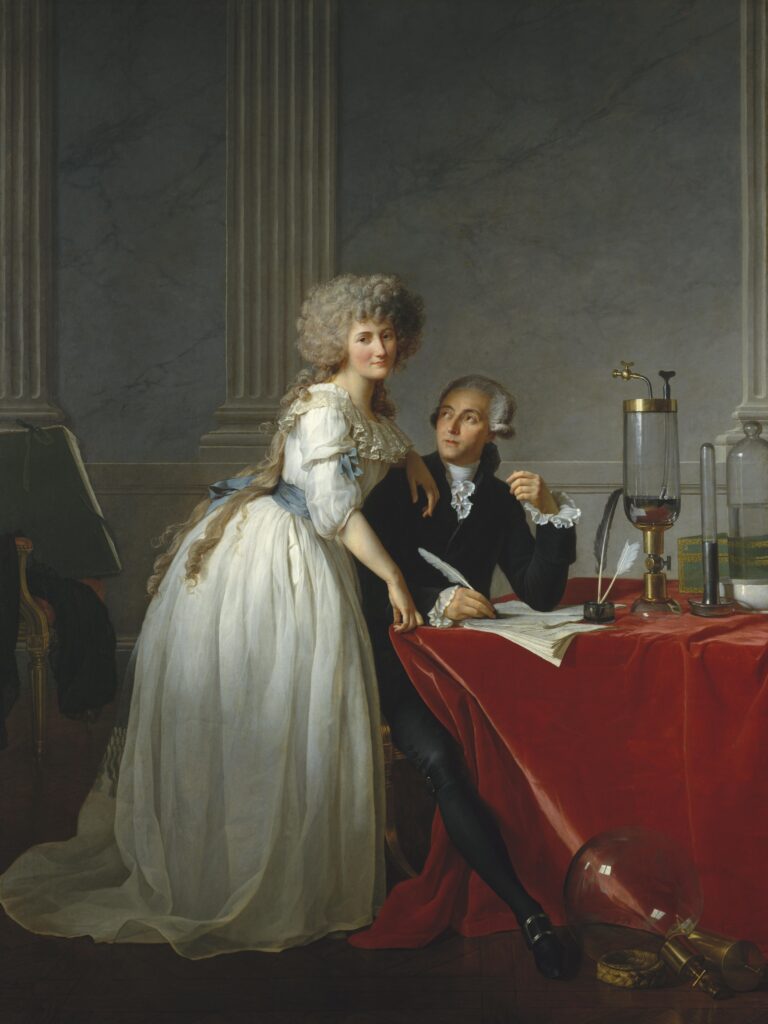
Hydrogen had originally been isolated and discovered in 1766 by English scientist Henry Cavendish, who observed the element’s flammability firsthand by bringing a flame close to the gas while experimenting with certain metals (hence the erroneous name inflammable air).
The Lavoisiers’ work was fundamental in laying the foundations of modern chemistry, dismantling the hitherto accepted Phlogiston theory, which asserted the existence of an element present in flammable compounds that was released during their combustion.
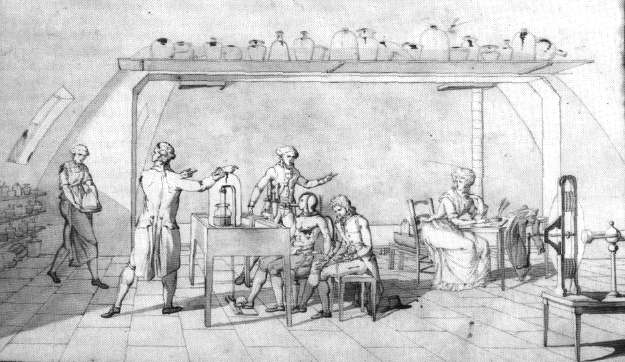
Although Marie-Anne’s contribution is widely recognised today, her figure is often overshadowed by that of her husband. However, the scientist was not only the intellectual mind behind the experiments that proved the nature of water as a compound, but went much further: Marie-Anne’s illustrations of daily laboratory work offer an incomparable window into the past, and her knowledge of Latin and English allowed her to translate major scientific treatises into her native language, enabling the couple to conduct cutting-edge research.
4. A matter of size
Hydrogen escapes all our human sensors: it is colourless, tasteless, and odourless, and the reason for these three qualities lies in physics and chemistry.
Hydrogen molecules cannot absorb visible light due to their structure and size: their electrons do not interact with photons because they exist at vastly different energy levels. However, you’ve probably heard of the “colours of hydrogen”: in reality, that refers to its origin and its use as an energy vector. If you want to learn more, don’t miss this story where we explain why there is gray, pink, or green hydrogen!
Being a very light molecule without an electrical charge, hydrogen is a tasteless gas that goes unnoticed by our taste buds as it does not interact with specific receptors. Would it taste sweet, or rather salty?
Nor can we smell it: the receptors in our nose react to larger, more complex molecules. Hydrogen is so small and simple that it cannot activate communication between our sense of smell and our brain.
5. Exceptionally special
Hydrogen is an extraordinary element for many reasons: despite being so common, it constantly surprises us with its peculiarities.
Did you know it is the only element whose isotopes (atoms with the same number of protons but a different number of neutrons) have their own proper names?
- Protium: Undoubtedly the most abundant, representing almost all (99.98%) of the hydrogen found in nature. It consists of a single proton and an electron, but has no neutrons.
- Deuterium: with a nucleus composed of one proton and one neutron, it is a stable isotope widely recognized for its role in nuclear fission reactors, as it is used in heavy water (deuterium oxide) to cool their systems. In addition, it is a promising fuel for nuclear fusion.
- Tritium: A radioactive isotope with one proton and two neutrons inside. It is used in fields as diverse as nuclear medicine and defense, as well as an energy source. It is extremely scarce.

You’re probably familiar with other famous isotopes of elements like carbon, including carbon-14; in fact. That’s because all elements on the periodic table have different isotopes, whether natural or laboratory-synthesized. However, apart from hydrogen, they are only designated by a number.
As you can see, hydrogen holds many wonders within. For us, it is not only an incredible element from a chemical, physical, or historical perspective: it is an engine of change with the potential to transform our future. That is why we dedicate every day to researching how to produce green hydrogen in the most environmentally sustainable way!